Article: Marble vs quartzite: choosing a natural stone benchtop
Marble vs quartzite: choosing a natural stone benchtop
A squeeze of lemon over a chopping board is a good place to begin when choosing a kitchen benchtop. On marble, a stray drop can leave a dull patch. True quartzite stands up well to food acids and is harder to scratch. For a busy prep bench where you want the finish to stay even, quartzite is usually the easier choice. Marble suits a kitchen where you welcome the patina that comes with cooking.
Why do marble and quartzite wear differently?
Marble forms when limestone or dolostone recrystallises under heat and pressure. Its carbonate minerals react with acids such as lemon juice or vinegar. This reaction, called etching, changes the surface texture. You might first notice an etch when afternoon light catches a patch of the bench at an angle.
Natural quartzite forms from quartz-rich sandstone. Its tightly joined quartz grains give it much of its scratch resistance. Porosity varies from slab to slab, however, so even a hard quartzite can absorb a spill. Ask your supplier to confirm the stone’s identity and the sealing advice for the slab you choose. Read geologist Karin Kirk’s guide to quartzite.
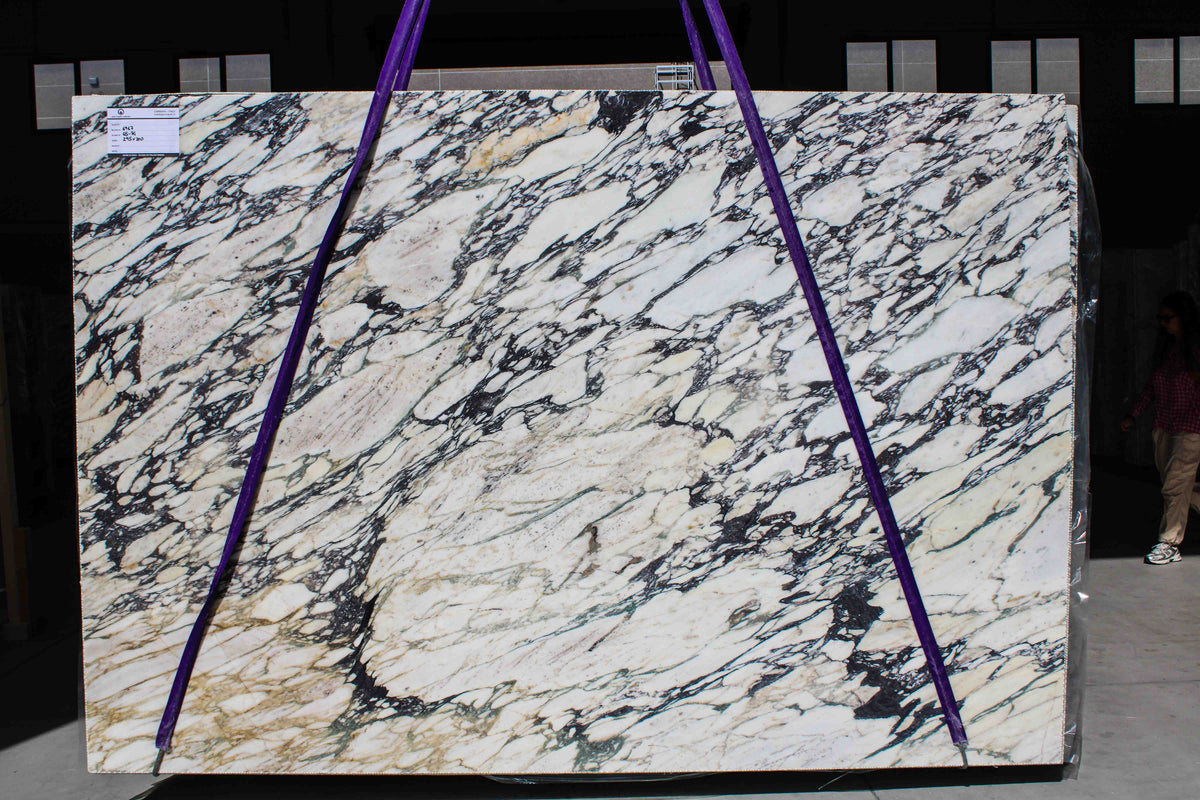
Calacatta Viola marble and Taj Mahal quartzite
Calacatta Viola, pictured above, is an Italian marble with burgundy and violet veins crossing a creamy-white ground. Hold a cabinet sample against a pale section of the slab, then move it beside a dark vein. On a long island, both pairings will be visible from across the room.

Taj Mahal is a Brazilian quartzite with an ivory and beige ground and delicate veining. Set it beside the same cabinet door, then introduce a piece of oak. Seeing both stones with the joinery makes it easier to decide whether the room needs the bold veining of Calacatta Viola or the quieter movement of Taj Mahal.
Does sealing prevent stains or etching?
A suitable impregnating sealer can slow the absorption of oil and other liquids, giving you more time to blot a spill. Marble can still etch after sealing because the acid reacts with the surface itself. For either stone, use a chopping board, rest hot pans on a trivet and clean with a soft cloth and a pH-neutral stone cleaner. Follow the care instructions for your particular slab and finish. See the Natural Stone Institute’s care guide.
What should you check before choosing a slab?
For a Melbourne kitchen project, take your cabinet, flooring and tapware samples to the slab viewing. Stand back far enough to see the whole face. Ask the fabricator to mark out the sink, island edge and any joins so you can see where a favourite vein will run. A small sample can settle a colour question. The full slab tells you what the finished island will look like.